
Carbon, Ponds and Biodiversity: How Local Councils Can Create Nature-Rich Water Habitats
- Laura
- Oct 27, 2025
- 3 min read

Introduction
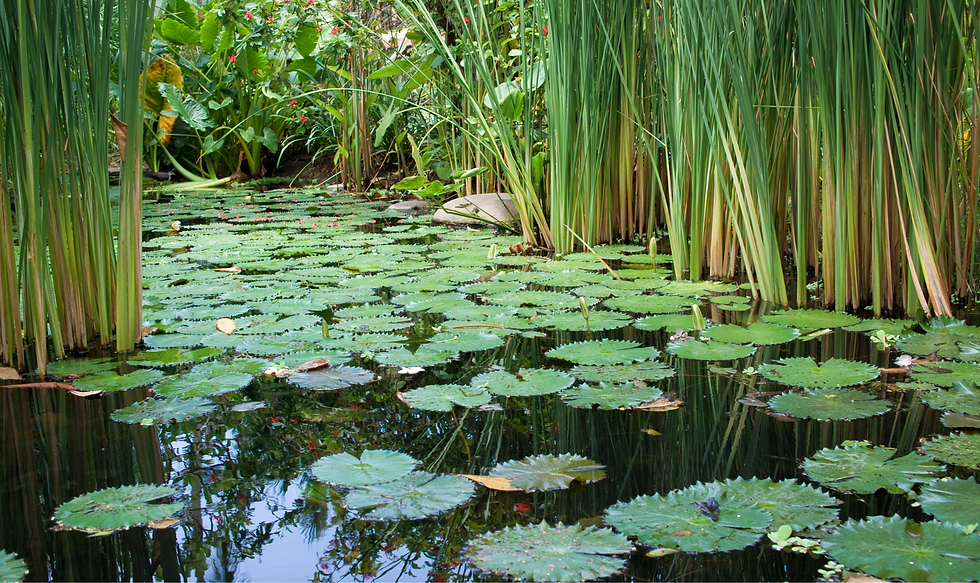
Ponds are more than picturesque village features. Emerging research shows they can be powerful carbon stores and biodiversity hotspots - supporting amphibians, insects, birds and plants. For town, parish and community councils in England and Wales, investing in ponds offers an opportunity to deliver nature, climate and community benefits locally.
Carbon storage: a hidden role of pond biodiversity
Recent studies in the UK highlight that ponds can store carbon at some of the highest rates of any habitat. Sediment in pond bottoms can lock away carbon dioxide over long periods, making small ponds disproportionately effective as carbon-sinks. For instance, ponds have been shown to sequester up to 20-30 times more per square metre than woodland or grassland in some cases, according to ScienceDirect.
By factoring ponds into local nature recovery plans or asset-management strategies, councils can begin to embed climate resilience into biodiversity planning in tandem.

Biodiversity benefits: from plants to birds
Ponds support an extraordinary range of species - plants, aquatic invertebrates, amphibians, mammals and birds. According to the Freshwater Habitats Trust, ponds “support an extraordinary two-thirds of all freshwater species” in the UK.
Birds & open water habitat
Ponds also play a critical role for birds - including waterfowl such as ducks and swans, wading species and insect-feeding birds.
In agricultural settings, managed open-canopy ponds have been shown to significantly increase avian species richness and abundance compared to unmanaged ponds. ScienceDirect
A general “pond” of any size can become a drinking, bathing or feeding site for garden and wild birds alike. As The Guardian reports, “birds, bees, hedgehogs all need water to drink and bathe.” The Guardian
While large reservoirs like Abberton Reservoir show just how vital open water is for wildfowl (e.g., swans, teem of ducks), even small parish ponds contribute stepping-stones for bird movement and habitat diversity.
Other wildlife
Amphibians: ponds provide breeding grounds for frogs, toads and newts. The shallow margins, vegetation and still-water habitat are critical, according to Flora & Fauna.
Invertebrates: dragonflies, damselflies, aquatic beetles - many rare or declining - depend on pond habitat. A UK study noted ponds support more rare plant species than many larger habitats.
Connectivity & habitat networks: The WWT (Wildfowl and Wetlands Trust) says that ponds act as nodes in ecological networks, allowing species movement between hedgerows, wetlands and woodlands, improving resilience.

Policy & local-authority relevance in England & Wales
Wales: Freshwater habitats are directly woven into ecosystem resilience policies and into the duty under Section 6 of the Environment (Wales) Act 2016. Restoring ponds can help community councils show they are maintaining and enhancing biodiversity and supporting local nature recovery.
England: Ponds form part of green infrastructure and sustainable drainage (SuDS) strategies, are referenced in Local Nature Recovery Strategies (LNRS) and can contribute toward biodiversity net-gain outcomes associated with planning policy.
For both contexts, councils can link pond projects to broader funding programmes, community engagement, climate resilience and nature-recovery ambitions.
Practical steps for councils
Below are key areas your council can begin enhancing ponds carbon biodiversity, with the option of getting specialist support from Green Council Biodiversity Solutions at each stage.
Survey & feasibility
Identify existing ponds (even small ones) and review their condition, margins, shading, and sources of runoff.
Check water source and hydrological context.
Green Council can assist with an initial site visit and feasibility summary.
Design & restoration or creation
Consider restoring old ponds by de-siltation, margin planting and controlling invasive species.
Where space allows, explore creating a new pond or water feature sized to your land.
Green Council can provide design options, planting lists and outline specifications.
Management & monitoring setup
Define buffer vegetation around the pond, plan margin zones and monitor for invasive species or sediment build-up.
Consider how the pond will be maintained over time and how success will be tracked.
Green Council can help set up a straightforward monitoring framework and advise on maintenance considerations.
Community engagement & utilisation
Encourage community groups, schools or volunteers to use the pond for nature activities: pond-dipping, bird-watching, signage about local wildlife.
Promote the pond’s role for birds, insects, amphibians and plants to boost local engagement.
Green Council can support event planning, interpretive signage and advice on linking to projects.
Final thoughts
Ponds are small spaces that deliver big value. They capture carbon, support wildlife and give communities a place to connect with nature. With the right planning and management, a pond can become one of the most rewarding features in any parish or town landscape.
If your council is exploring ways to enhance biodiversity or create new habitats, get in touch with Green Council Biodiversity Solutions. We can help you assess your options and develop a practical, nature-positive plan for your local area.



Comments